
Wood Pellet Cat Litter Guide
Wood pellet cat litter guide: how pine pellets and sifting litter boxes work, the daily sifting routine, real pros and cons, budget tips, and switching cats.
Quick answer
Wood pellet cat litter is compressed sawdust pellets — usually pine — that disintegrate into sawdust when wet. It's used with a sifting litter box: urine turns pellets to sawdust, the sawdust falls through a sifting grate into a lower tray, and you scoop solids off the top. It's one of the cheapest natural litters, very low-dust, and low-tracking — but it's non-clumping, so the routine is sift-and-dump rather than scoop-and-go.
Why this guide is honest about wood pellets
Pine pellets are the litter world's open secret: the same pellets sold as horse bedding for a fraction of the price, repurposed for cats. That alone tells you something about the category — it's less "engineered product" than "clever hack," and this guide treats it that way. We did not lab-test litters, and we won't pretend we did. Everything here comes from the material properties of compressed sawdust, documented product claims, patterns across verified buyer reviews, and published veterinary guidance on what cats actually prefer.
One note on framing: this guide covers wood and pine pellets — the non-clumping kind. Wood-fiber litters that clump (using plant-based binders) are a different product with different mechanics. If you want wood that clumps, see how the types compare in our complete guide to the types of cat litter.
What wood pellet cat litter actually is
Wood pellet litter is exactly what it sounds like: sawdust compressed under heat and pressure into dense, cylindrical pellets, usually made from pine. The compression is what makes the whole system work — dry pellets are hard and heavy; add moisture and they expand and crumble back into sawdust.
The pine part matters. Pine contains natural compounds that genuinely suppress ammonia odor — this isn't fragrance masking, it's the wood itself doing the work. That's why a fresh pine-pellet box famously smells like a lumber aisle rather than a litter box, at least for the first week.
The well-known brand name is Feline Pine, which has sold pine pellets for cats for decades. But here's the open secret: kiln-dried pine horse-bedding pellets — sold in big bags at feed and farm stores — are functionally the same material at a fraction of the per-pound cost. This is a widely practiced budget move in the cat community. Bedding pellets run a bit larger than pet-branded ones, so cat acceptance can vary slightly, but the material is the same compressed pine sawdust.
How sifting litter boxes work
A sifting litter box is really two boxes stacked: a top tray with a slotted grate floor, and a solid lower tray or pull-out drawer. The pellets sit on the grate. Here's the cycle:
- The cat urinates on the pellets. Moisture breaks the compressed pellets down into sawdust — the disintegration step the whole system depends on.
- You shake or sift. A quick side-to-side shake of the top tray (or a few passes with the scoop) lets the fine sawdust fall through the slots into the lower tray. Intact dry pellets stay on top.
- Solids stay on top for scooping. Pellet systems don't clump, so feces are scooped off the pellet surface daily, like any other litter.
- The lower tray collects the sawdust. This is the wet, concentrated part — it gets dumped and rinsed on a schedule.
- Top up pellets as they break down. As pellets disintegrate, the top layer thins; add fresh pellets to maintain 1–2 inches of depth.
The elegance of the system is that urine effectively removes itself from the cat's layer — the sawdust falls away from the surface the cat walks on. The weakness is the flip side: until you sift, wet sawdust sits mixed in with the pellets, and the system only controls odor if you keep up with the lower tray.
If you don't own a sifting box yet, that's the one piece of equipment this system requires — any slotted-tray-over-drawer design works. You don't need the most expensive model; the mechanism is simple.
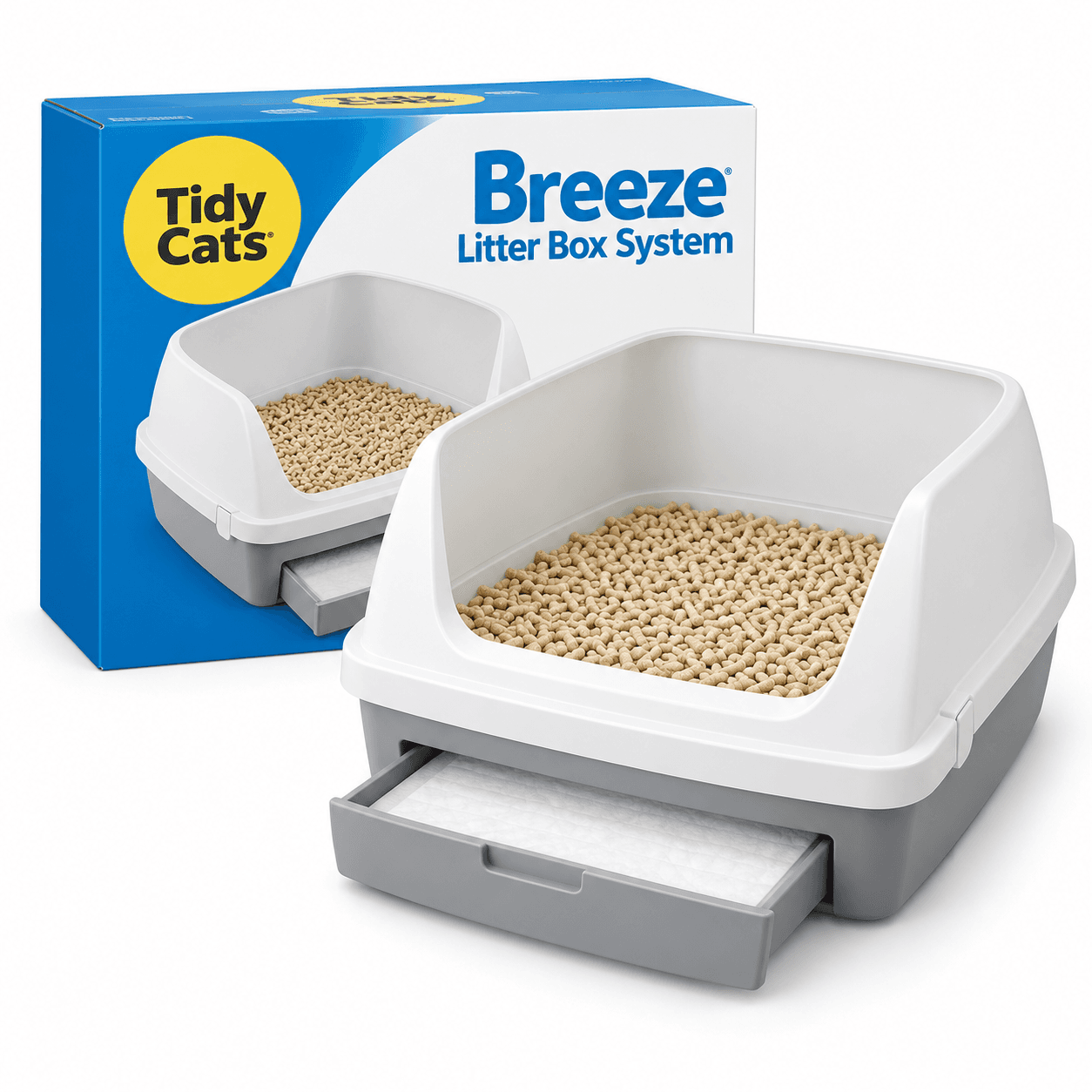 For pellet setups
Tidy Cats Breeze Litter Box System
The classic sifting-box design — slotted tray over a pull-out drawer, ready for pellets
The sifting routine, step by step
Daily (about two minutes):
- Scoop solids off the pellet surface.
- Shake the sifting tray side to side so loose sawdust falls through the grate into the lower tray.
Every few days:
- Check the lower tray. In a single-cat box, dumping it every 3–4 days is typical; in multi-cat homes, plan on more often. This tray is the concentrated odor source — skipping it is how pellet boxes start to smell.
Weekly:
- Dump and rinse the lower tray thoroughly.
- Top up the top tray with fresh pellets to maintain 1–2 inches of depth.
Monthly:
- Full change: dump all remaining pellets, wash both trays, refill with fresh pellets. Even with diligent sifting, fine dust accumulates and the pine odor advantage fades over time.
Compared with clay's scoop-and-go, this is a different kind of work — less scooping, more shaking and tray-dumping. Some owners find it easier; some find the lower-tray duty less pleasant than scooping clumps. Know yourself before you commit. To compare this routine against other types, see our guide to how often to change cat litter.
The pros: why pellet people are evangelists
Very cheap. Pellets are among the cheapest litters per pound, and the horse-bedding route makes them cheaper still — a large bag of bedding pellets can cost less than a small bag of premium clay, and it lasts a single-cat home for months.
Natural pine odor control. The signature advantage: pine genuinely suppresses ammonia odor rather than covering it with fragrance. The box smells like a woodshop, not a bathroom — at least while the pellets are fresh.
Very low dust. Intact pellets produce almost no airborne dust — one of the lowest-dust options available. The sawdust is dustier, but it lives in the lower tray, away from the pour and the cat's nose.
Low tracking. Pellets are large and heavy — among the least-tracking litters you can buy. Stray sawdust is the exception, and a mat handles it.
Kitten-friendly. Large pellets are hard for kittens to ingest or scatter — a genuine advantage over fine clumping litters for very young kittens, who mouth everything.
Biodegradable. It's compressed sawdust — it breaks down, unlike clay or crystal. Some owners compost the used sawdust (not the solids) in outdoor systems; check local guidance before composting any pet waste.
The cons: the honest trade-offs
Non-clumping — urine isn't removed until you sift. This is the fundamental trade-off. With clay, urine leaves the box in a clump the same day. With pellets, wet sawdust sits in the lower tray until you dump it. Sift and dump diligently, or the odor advantage evaporates.
Pellet texture gets rejected. Large, hard pellets feel nothing like the fine, sand-like texture most cats prefer, and pellet rejection is common — cats raised on clay are the likeliest holdouts. This is the number one reason pellet experiments fail, and it's a cat preference, not a product defect.
Sawdust duty is a real chore. The lower tray concentrates everything unpleasant about the box into one drawer. Owners who neglect it end up with exactly the ammonia smell they bought pellets to avoid.
The pine scent fades. Week-one lumber-aisle freshness gives way to a duller smell as pellets break down — one more reason the monthly full change matters.
Pine scent bothers some people. If you dislike the smell of pine, unscented pellet versions exist, but they lose the main odor advantage that justifies the system.
Not flushable. Compressed sawdust expands in water — flushed pellets can swell into a serious clog. Never flush pellets or the sawdust; bag it and trash it.
Horse bedding pellets: the budget move, done right
The feed-store hack deserves its own section because it's the main reason pellets have a cult following:
- Buy kiln-dried pine bedding pellets. Kiln-drying matters — it drives off moisture and volatile compounds. This is the standard product at farm and feed stores.
- Avoid anything with added fragrances or accelerants. Bedding pellets are plain by default; just check the bag before you buy.
- Expect larger pellets. Bedding pellets run bigger than pet-branded ones. Most cats don't care; texture-sensitive cats might.
- Store them dry. A big bag lasts a single-cat home for months — keep it sealed and dry, or the pellets pre-disintegrate into very expensive sawdust.
This is the cheapest legitimate litter setup in the category: bedding pellets plus a sifting box is a genuinely budget natural system.
Transitioning from clay to pellets
Pellet rejection is the number one failure mode, so don't rush it:
- Week 1: Mix a handful of pellets into the clay in the existing box. Let the cat investigate on its own terms.
- Week 2: Move to roughly half pellets, half clay.
- Week 3: Set up the sifting box alongside the old box, filled with mostly pellets. Let the cat choose.
- When the cat uses the sifting box reliably, retire the old box.
If the cat consistently chooses the old box — or worse, starts going elsewhere — pause or abandon the switch. A cat avoiding the box is a far worse outcome than a more expensive litter. Some cats never accept pellets, and that's a preference to respect, not a problem to solve.
Our verdict
Wood pellets are the best budget natural litter and one of the lowest-tracking options in the category — if you commit to the sifting routine. The system only works when the lower tray gets dumped on schedule; neglect it and you lose the odor advantage that justifies the whole setup. Transition gradually over two to three weeks, and keep clay as a fallback if your cat votes no. Compare with the other natural options in our walnut litter guide and the full types of cat litter guide.
Sources
- ökocat — Clumping Wood Litter FAQ (official) — wood litter manufacturing: spruce/fir/pine blend, high-heat drying removes volatile oils and phenols; 99% dust-free claim.
- 2021 AAHA/AAFP Feline Life Stage Guidelines — peer-reviewed: cats' substrate texture preferences and why fine-grained litter is the most accepted.
- UC Davis School of Veterinary Medicine — Toxoplasmosis & cat waste (PDF) — why pet waste (including used litter) belongs bagged in the trash, not flushed or casually composted.
Frequently asked questions
Part of our Types of Cat Litter: Complete Guide hub — start there for the full overview.
Keep reading
Affiliate disclosure: The Litter Logic earns a commission when you buy through links on this page — at no extra cost to you. It keeps our guides free and independent. As an Amazon Associate I earn from qualifying purchases. Read our full disclosure.