
Clumping vs Crystal Cat Litter for Odor
Clumping vs crystal cat litter for odor: we compare how clumping clay and silica crystals fight smell, and name the winning type for most US homes in 2026.
Quick answer
In the clumping vs crystal cat litter odor debate, clumping clay with genuine odor-neutralizing technology wins for most homes: hard clumps seal waste away from air, and daily scooping physically removes the odor source. Crystal (silica) litter is the better pick if you want low maintenance and low dust — its crystals absorb moisture and dehydrate solids, but urine stays in the box until your monthly full change. Choose clumping for maximum odor power per dollar; choose crystals for convenience.
The choice between clumping and crystal cat litter is the single most consequential decision you'll make for odor control — more important than brand, scent, or price. Each type attacks the odor problem with a completely different mechanism, and understanding those mechanisms is the key to picking the right one for your household. This comparison breaks down exactly how each works, where each wins and loses, and which litter type deserves your money in 2026.
How clumping litter fights odor: the seal-and-remove mechanism
Clumping litter is almost always made from sodium bentonite clay. When it contacts moisture, the clay swells and forms a hard, cohesive clump around urine, and the surrounding dry granules coat solid waste. From an odor-control standpoint, this creates a two-part defense:
- The seal. A well-formed clump physically encapsulates waste, cutting off the air contact that lets ammonia and other volatile compounds escape. The harder and tighter the clump, the more effective the seal — which is why clump integrity matters more than any marketing claim on the bag.
- The removal. Because clumps hold together, you scoop them out of the box entirely. Every day you scoop, you physically remove the odor source from your home. Over a week, that's the bulk of the waste gone, leaving mostly fresh litter behind.
- The chemistry boost. Most odor-focused clumping litters add baking soda or activated carbon. Baking soda neutralizes ammonia on contact; activated carbon traps odor molecules in its porous structure. These don't just mask smell — they attack it chemically.
The practical upshot: with daily scooping and a full change every 2–4 weeks, a good clumping litter keeps the box smelling like... nothing, most of the time. It also earns high marks from cats — clay's soft, sand-like texture is closest to what cats instinctively prefer, and our top-rated odor-control litter is a clumping clay formula. For the full ranked list with product-level breakdowns, see the best cat litter for odor control in 2026.
How crystal litter fights odor: the absorb-and-dehydrate mechanism
Crystal litter is made of silica gel — the same highly absorbent material you'd find in those "do not eat" desiccant packets, produced in a pet-safe form. Its odor strategy is the mirror image of clumping:
- The absorb. Silica crystals are extraordinarily porous and wick moisture — urine — deep into each granule. Instead of forming a clump you remove, the urine is pulled into the crystals and locked away from the surface.
- The dehydrate. Once urine is absorbed, the silica's desiccant nature dehydrates it, suppressing the bacterial activity that produces ammonia odor. Solid waste, which crystals don't absorb, dries out on the surface and is scooped away daily.
- No clumps, no full changes for weeks. Because there's nothing to scoop except solids, the same crystals keep working for roughly a month per cat (per typical manufacturer guidance). When odor starts to break through — you'll notice the crystals yellowing and the box smelling despite scooping — you dump the whole box and refill.
The practical upshot: crystal litter offers genuinely low maintenance and noticeably less dust than clay. The tradeoff is fundamental — urine stays in the box for the entire cycle. Absorption and dehydration suppress odor well for the first few weeks, but nothing about the mechanism removes the urine itself until you do the monthly dump. In multi-cat homes or small apartments, many owners report odor breaking through earlier than the one-month mark.
One more thing worth knowing: silica crystals are non-toxic, but some cats dislike the texture under their paws. If you're curious about safety details, read our guide on whether crystal cat litter is safe.
Head-to-head: clumping vs crystal for odor
| Criteria | Clumping (clay)Pick | Crystal (silica) |
|---|---|---|
| Odor mechanism | Seals waste in hard clumps + scooped out daily; baking soda/carbon neutralize ammonia | Absorbs urine into silica granules and dehydrates it; urine stays in box until monthly change |
| Odor-control ceiling | Higher — waste physically leaves the house every day | Good, but limited by urine accumulating in-box over the month |
| Maintenance | Daily scooping required; full change every 2-4 weeks | Scoop solids only; stir crystals; full change about monthly |
| Dust | Low to moderate depending on formula | Very low — one of crystal's biggest advantages |
| Tracking | Moderate — fine clay granules travel on paws | Moderate — larger crystals can scatter but are easy to see and sweep |
| Longevity | Box stays fresh with daily scooping; full refresh every 2-4 weeks | One bag lasts about a month per cat |
| Cost band | Typically lower per month — bags are cheaper and widely available | Typically higher per month — specialty pricing for the convenience |
| Best for | Maximum odor control per dollar; multi-cat homes | Low-maintenance households; dust-sensitive owners; single-cat homes |
Our representative picks
Rather than review every brand, we picked one representative of each type — the products that best embody what their category does well for odor control.
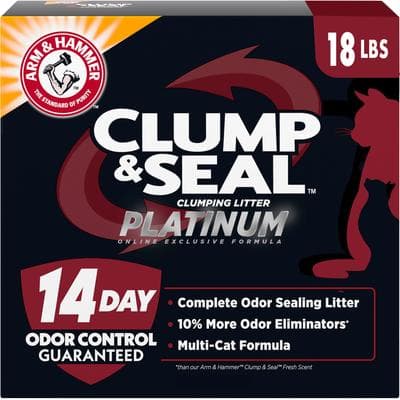
Clumping pick: ARM & HAMMER Clump & Seal Platinum
 Best for odor
ARM & HAMMER Clump & Seal Platinum
Baking soda odor control with a moisture-activated sealing clump
This is the clumping archetype done right: sodium bentonite clay that forms genuinely hard clumps, plus ARM & HAMMER's baking soda chemistry for real ammonia neutralization rather than fragrance masking. It demonstrates exactly why clumping wins the odor fight — the seal-and-remove mechanism working at full strength. If you're choosing the clumping route, this is the formula to benchmark everything else against.
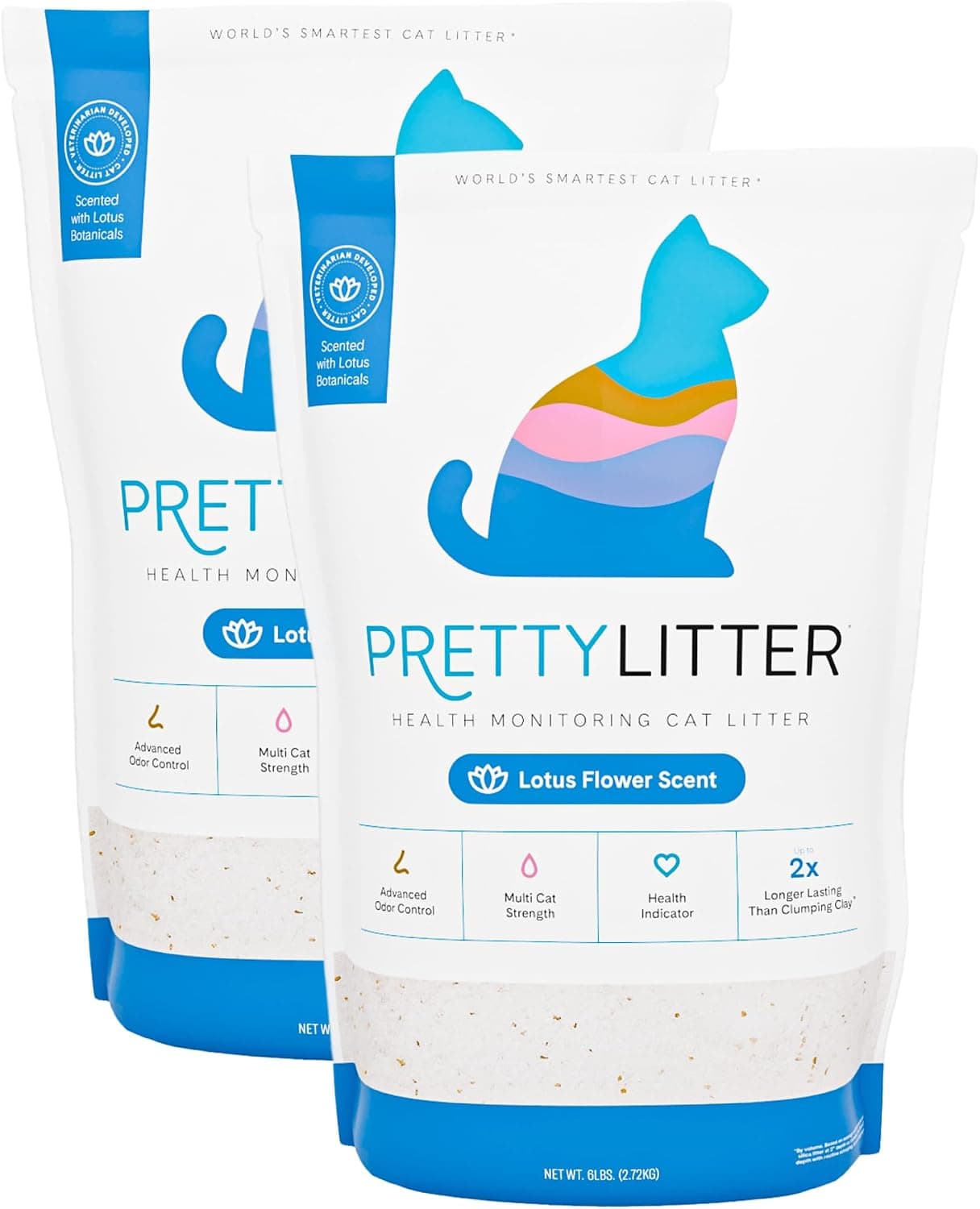
Crystal pick: PrettyLitter
 Best crystal option
PrettyLitter is the crystal category's flagship: silica gel crystals that absorb urine and dehydrate waste, designed for about a month of use per cat with only solid-waste scooping. It also adds color-changing health-monitoring crystals, which is a genuine differentiator no clumping clay can match. It shows crystal litter at its best — and even at its best, the mechanism's ceiling is what the comparison table above describes.
Pros and cons of clumping litter
- Strongest odor control per dollar — waste leaves the house daily
- Hard clumps seal ammonia away from air effectively
- Baking soda and carbon formulas neutralize odor chemically, not just mask it
- Sand-like texture has the highest cat acceptance
- Lower typical monthly cost and widest availability
- Requires daily scooping — skip days and odor wins fast
- Dustier than crystal, even in low-dust formulas
- Heavier bags to carry and dispose of
- Full box change and wash every 2-4 weeks
Pros and cons of crystal litter
- Lowest maintenance — scoop solids, stir, change monthly
- Very low dust — a real benefit for allergy-sensitive households
- Lightweight and easy to handle
- Absorbs urine on contact with no clump crumbling
- Urine stays in the box all month — odor control fades as crystals saturate
- Higher typical monthly cost
- Some cats reject the crystal texture under their paws
- In multi-cat homes, the one-month lifespan often shortens considerably
Who should pick which?
Pick clumping litter if: odor control is your top priority, you have multiple cats, your box sits in a small or poorly ventilated space, you don't mind daily scooping, or you're working within a tighter budget. The seal-and-remove mechanism simply gives you more odor-fighting leverage per dollar than anything else on the market.
Pick crystal litter if: you want the lowest-maintenance routine possible, dust is a genuine problem in your home (allergies, respiratory sensitivity), you have one cat and a well-ventilated box location, or you value PrettyLitter-style health monitoring. Accept that you'll pay more per month and should watch for odor breakthrough in the final week of each cycle — changing a few days early is cheaper than living with the smell.
Consider a hybrid routine if: you like crystal's convenience but need clumping's odor power. Some owners use crystal litter in a second box while keeping clumping clay in the primary box. Just don't mix the two materials in the same box — it ruins both mechanisms.
The verdict
For pure odor control, clumping clay wins. The ability to seal waste in hard clumps and physically remove it from your home every day gives clumping litter an odor-fighting ceiling that crystal's absorb-in-place mechanism can't match — and it does it at a lower typical monthly cost. Crystal litter wins on lifestyle: if low maintenance and low dust matter more to you than maximum odor power, silica crystals are a legitimate, well-engineered choice, especially for single-cat homes. Either way, the habits matter as much as the material — learn how often to change cat litter to get the most from whichever type you choose.
How we ranked these
We want to be transparent about how this comparison was put together, because it shapes how much weight you should give our verdict:
- This is a research-based comparison, not a hands-on test. We did not test these litters in a lab or run controlled smell trials. Our conclusions are built on documented absorption and clumping mechanisms, published manufacturer specifications, and recurring themes in verified buyer reviews.
- We compared mechanisms, not individual bags. The goal is to explain how clumping clay and silica gel crystals each fight odor, so you can judge any product in either category — not just the two representative picks in this guide.
- "Odor control" means ammonia neutralization and waste isolation. We weighted odor control by whether a technology neutralizes ammonia at the chemical level and whether it removes or isolates waste from air — not by how strongly a fragrance masks the smell.
- Practical factors are scored qualitatively. Maintenance effort, dust, tracking, longevity, and cost are compared in relative terms (lower/higher, easier/harder) based on how each type is designed to be used. Where cost bands appear, they're labeled "typical" and reflect general US market pricing, not specific shelf prices.
- No invented numbers. You'll find no star ratings, review counts, or prices in this article. Those fluctuate constantly and we won't fabricate them.
With that understood, let's look at how each type actually fights odor.
Sources
- Dutch — Is Silica Cat Litter Safe? (vet-reviewed) — amorphous silica gel vs. crystalline silica dust; why crystal litter's safety profile differs from clay dust
- 2021 AAHA/AAFP Feline Life Stage Guidelines — peer-reviewed veterinary guidance: litter texture and scent preferences that shape the clumping-vs-crystal choice.
Frequently asked questions
Part of our Best Cat Litter for Odor Control (2026) hub — start there for the full overview.
Keep reading
Affiliate disclosure: The Litter Logic earns a commission when you buy through links on this page — at no extra cost to you. It keeps our guides free and independent. As an Amazon Associate I earn from qualifying purchases. Read our full disclosure.