
Best Kitten Litter: 6 Safe Picks
Best cat litter for kittens: 6 safe picks (non-clumping clay, paper, pine, walnut) plus vet-backed guidance on when to switch to clumping litter.
Quick answer
The best cat litter for kittens under about 8 weeks old is non-clumping litter — paper pellets, non-clumping clay, or pine — because young kittens explore the world with their mouths, and ingested clumping clay can cause intestinal blockages. Our safety pick for the youngest kittens is Yesterday's News paper pellets. Once a kitten is reliably past the mouthing phase, Dr. Elsey's Kitten Attract is the best training litter: fine-textured clumping clay with a manufacturer-claimed herbal attractant that draws kittens to the box. Every pick below is unscented, and every clumping pick comes with an age gate.
The safety rule comes first — read this before the picks
Kittens under roughly 8 weeks old explore with their mouths. They taste bedding, toys, and yes, litter. That curiosity is exactly why widely documented veterinary guidance says to avoid clumping litter for very young kittens: swallowed clumping granules can expand in the digestive tract and cause blockages, which in a tiny kitten can become an emergency fast.
So the rule is simple and non-negotiable for this roundup:
- Under ~8 weeks: non-clumping litter only — paper pellets, non-clumping clay, or pine pellets. If a kitten tastes it, nothing forms a clump inside them.
- Around 8 weeks and older: clumping litter becomes an option once the kitten is reliably not eating litter — consistently digging and burying without mouthing. Watch for a few days before you commit.
- Any age: unscented. Strong fragrance is a top reason cats of any age start avoiding the box.
This is general, widely documented guidance, not a diagnosis — if your kitten is eating litter persistently, is lethargic, or seems uncomfortable, that's a vet conversation, not a litter-buying decision.
The 6 picks at a glance
| Criteria | Precious Cat Non-Clumping | Tidy Cats Non-Clumping | Yesterday's News | Feline Pine | Kitten AttractPick | Naturally Fresh Walnut |
|---|---|---|---|---|---|---|
| Litter type | Clay (non-clumping) | Clay (non-clumping) | Paper pellets | Pine pellets | Clay (clumping) | Walnut (clumping) |
| Clumping? | No | No | No | No | Yes | Yes |
| Kitten-safe age | From the start | From the start | From the start | From the start | 8+ weeks, not mouthing | 8+ weeks, not mouthing |
| Odor control | Low — no clump to seal | Low | Low-moderate | Moderate (natural pine) | High (fine-clump seal) | Moderate-high |
1. Dr. Elsey's Precious Cat Non-Clumping — Best non-clumping clay
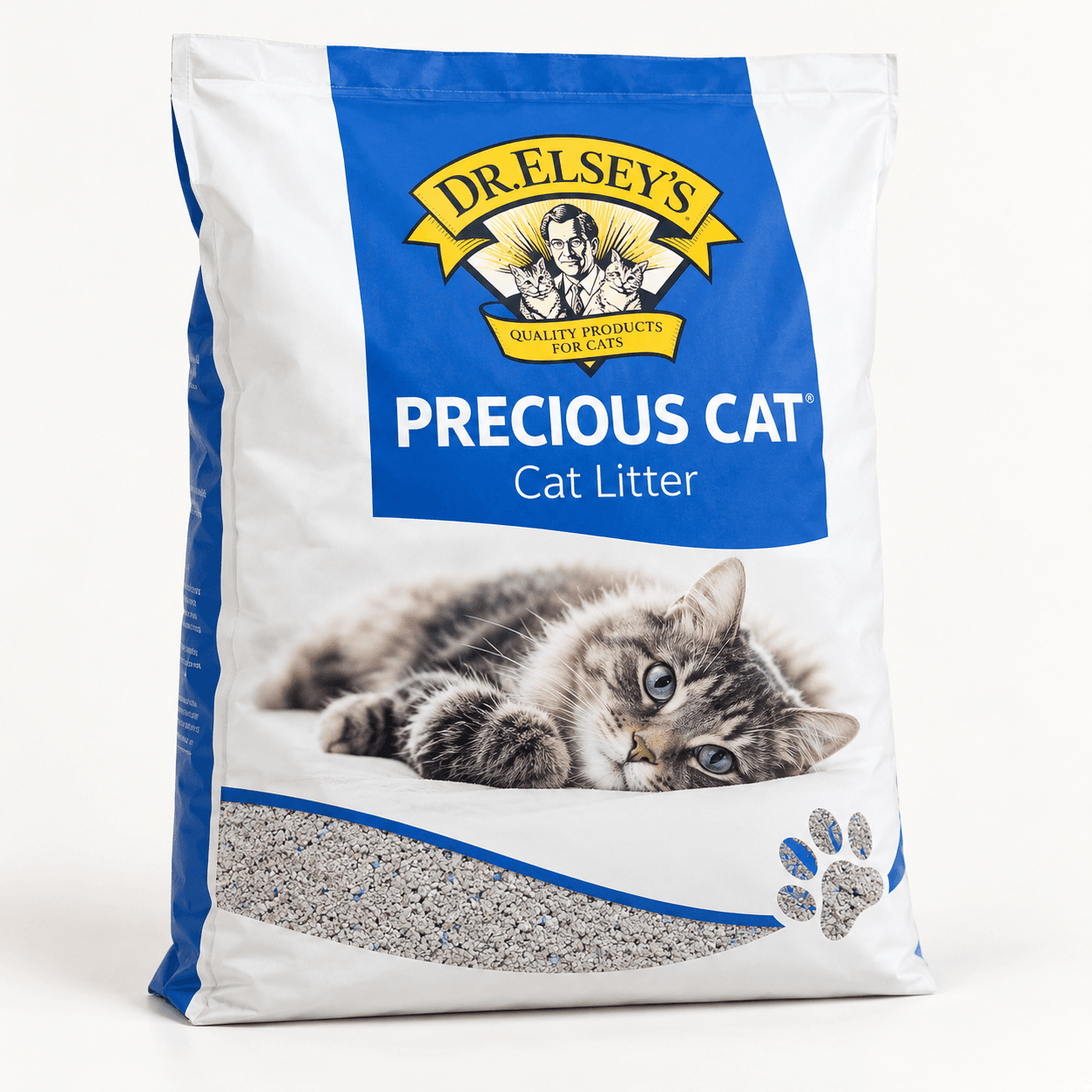 Best non-clumping clay
Dr. Elsey's Precious Cat Non-Clumping Cat Litter
Non-clumping clay with the vet-formulated texture cats accept most readily
- Non-clumping — nothing to form internal clumps if tasted
- Medium-grain texture matches what kittens dig in naturally
- Virtually dust-free, unscented, no additives
- Same brand vets recommend most often for box issues
- Odor control is weaker than clumping litter — plan full changes every 2–3 weeks
- Heavier than pellet litters
- Costs more than basic non-clumping clay
Why it's here: this is the premium version of the safest choice. Dr. Elsey's medium-grain texture is the one vets most consistently recommend, and in non-clumping form it gives the youngest kittens a safe, natural-feeling substrate from day one. The trade-off is honest and unavoidable: non-clumping litter can't seal urine, so odor control is purely a function of how often you do a full change. Scoop solids daily, dump and wash the box every couple of weeks, and it's excellent.
2. Tidy Cats Non-Clumping — Best budget non-clumping
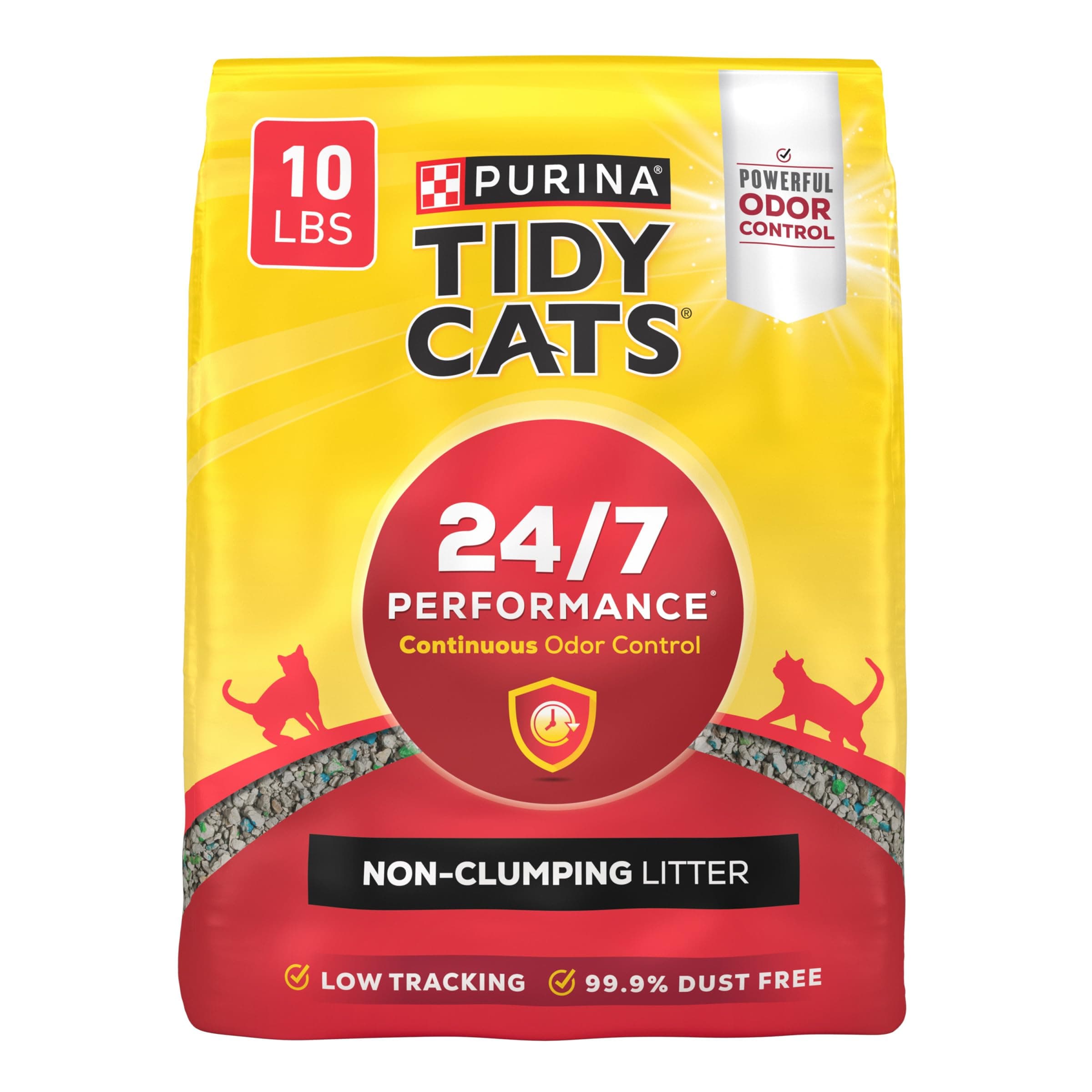 Best budget
Tidy Cats Non-Clumping Cat Litter
Straightforward non-clumping clay at the lowest price on this list
- Cheapest safe option for the youngest-kitten stage
- Non-clumping — safe if tasted
- Unscented formula available
- Available in every grocery store in America
- Dust is moderate — not the allergy pick
- No odor technology; full changes must be frequent
- Heavier to haul than pellets
Why it's here: kittens outgrow the non-clumping stage in a matter of weeks, so not everyone wants to pay a premium for a temporary bag. Tidy Cats Non-Clumping is the honest budget answer: safe, widely available, and cheap enough that dumping it fully every two weeks doesn't sting. Same routine requirement as pick one — scoop daily, full change on a short cycle — at a fraction of the cost.
3. Yesterday's News Original — Best paper pellet litter
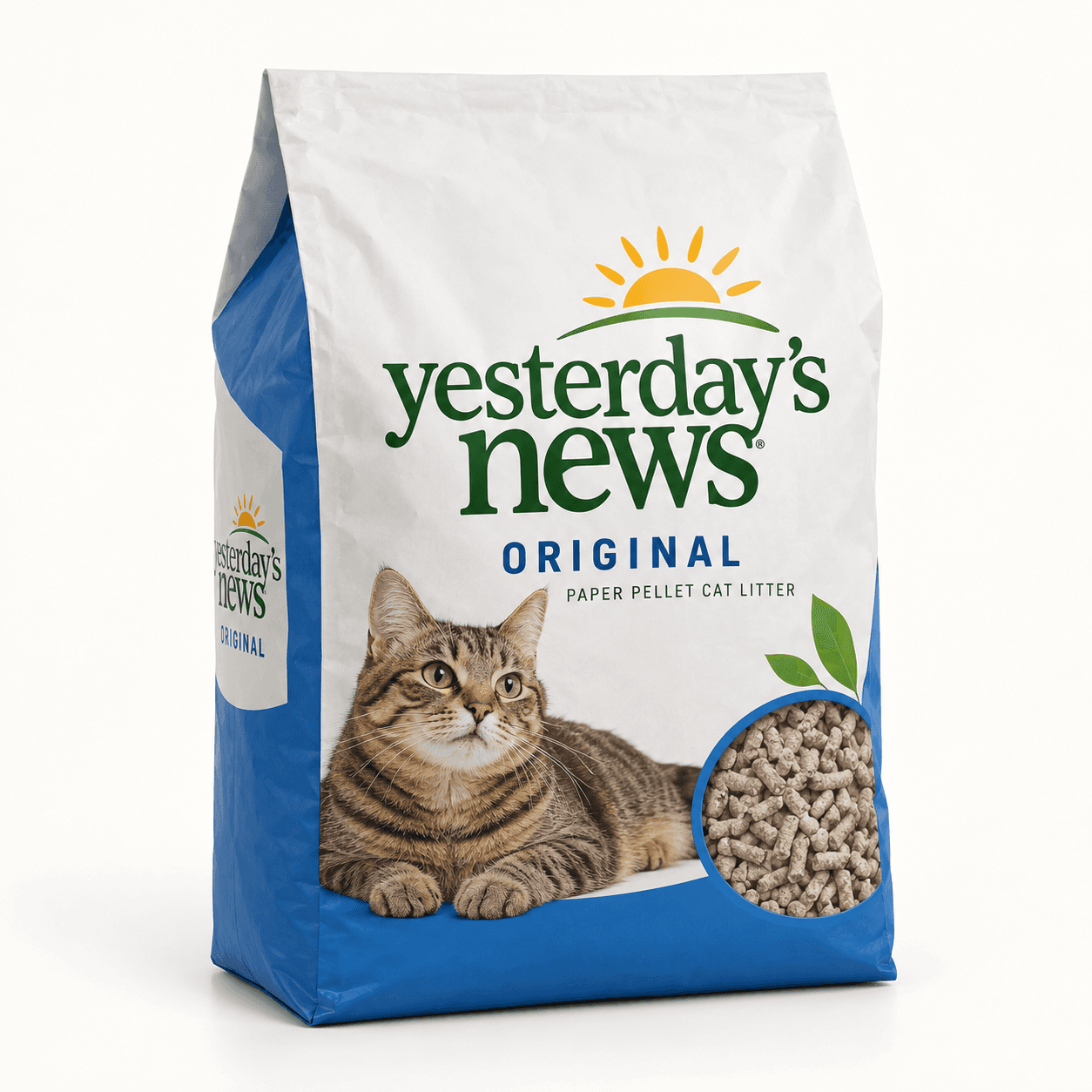 Best for youngest kittens
Yesterday's News Original Paper Cat Litter
Recycled-paper pellets — the classic young-kitten and post-surgery litter
- Non-clumping pellets — the textbook young-kitten substrate
- Very low dust; soft on tiny paws
- Made from recycled paper — no clay mining
- Same litter vets recommend after surgery
- Pellet texture is the least natural-feeling — some kittens need coaxing
- Odor control is modest; weekly full changes in busy boxes
- Tracking of pellets is low, but the fines can travel
Why it's here: if you want the single most conservative choice for a very young kitten, this is it. Paper pellets have been the veterinary default for fragile situations — newborns, post-surgery cats — for decades, for the same reason: nothing in it can clump inside an animal. It's soft, nearly dust-free, and cheap to replace often. The texture is the compromise; if the kitten seems reluctant, try a shallow layer of non-clumping clay (pick one or two) instead. For the broader map of how paper fits among the options, see our guide to types of cat litter.
4. Feline Pine Original — Best pine pellet litter
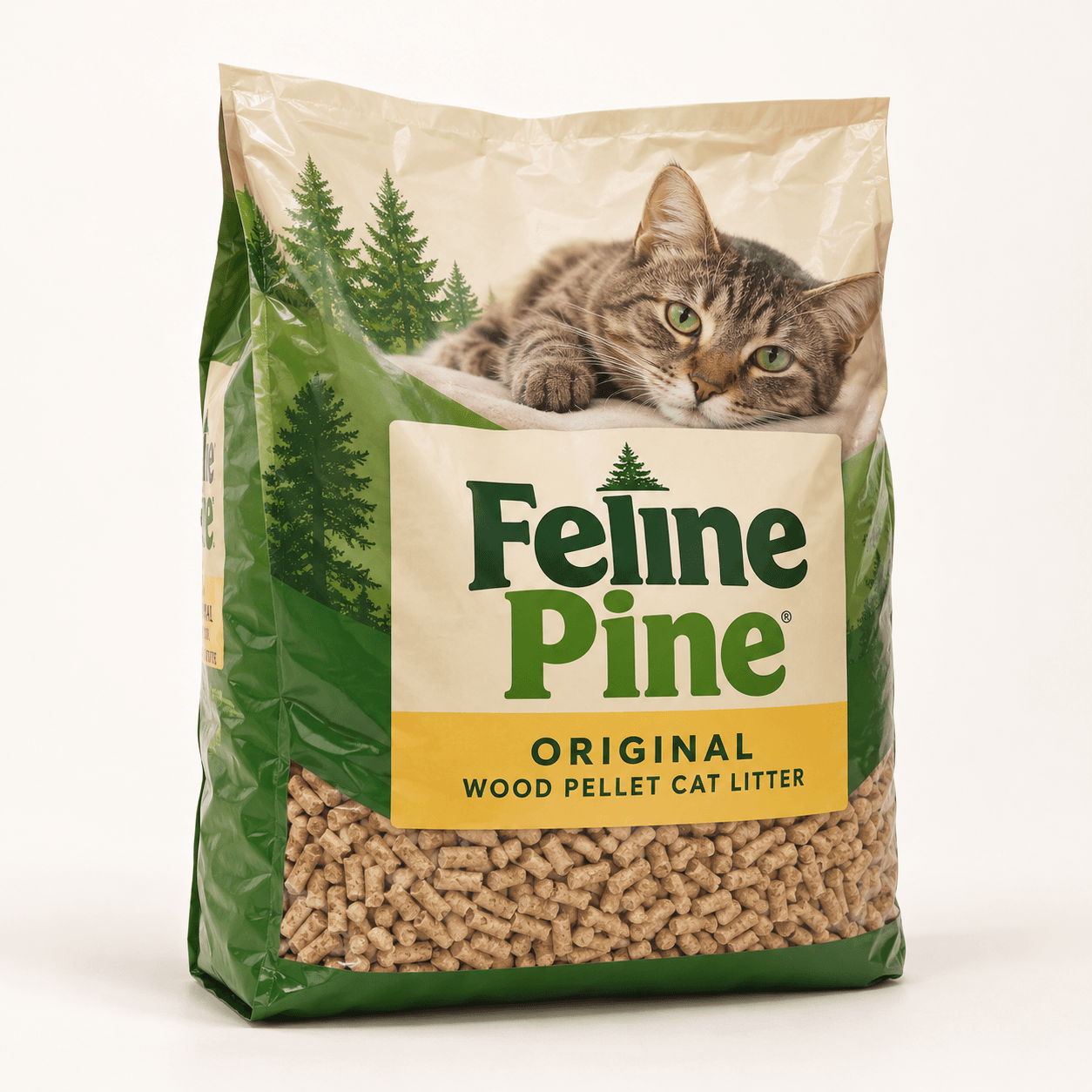 Best pine option
Feline Pine Original Non-Clumping Wood Cat Litter
Non-clumping pine pellets with natural pine odor control
- Non-clumping — safe for the mouthing phase
- Natural pine odor control without added fragrance
- Pellets stay in the box better than fine granules
- Biodegradable
- Pellets break down into sawdust as they absorb — needs regular stirring
- Some kittens dislike the coarse texture at first
- Odor control fades once pellets are saturated
Why it's here: the second pellet option, for buyers who want a little more odor help than paper offers. Pine fiber naturally neutralizes some odor, and the pellets are heavier and less trackable than fine granules. The routine is different from clay: stir the box regularly so the sawdust fines fall to the bottom, scoop solids daily, and do full changes before saturation sets in. Like paper, it's a temporary home for the youngest kittens — but a fresh-smelling one.
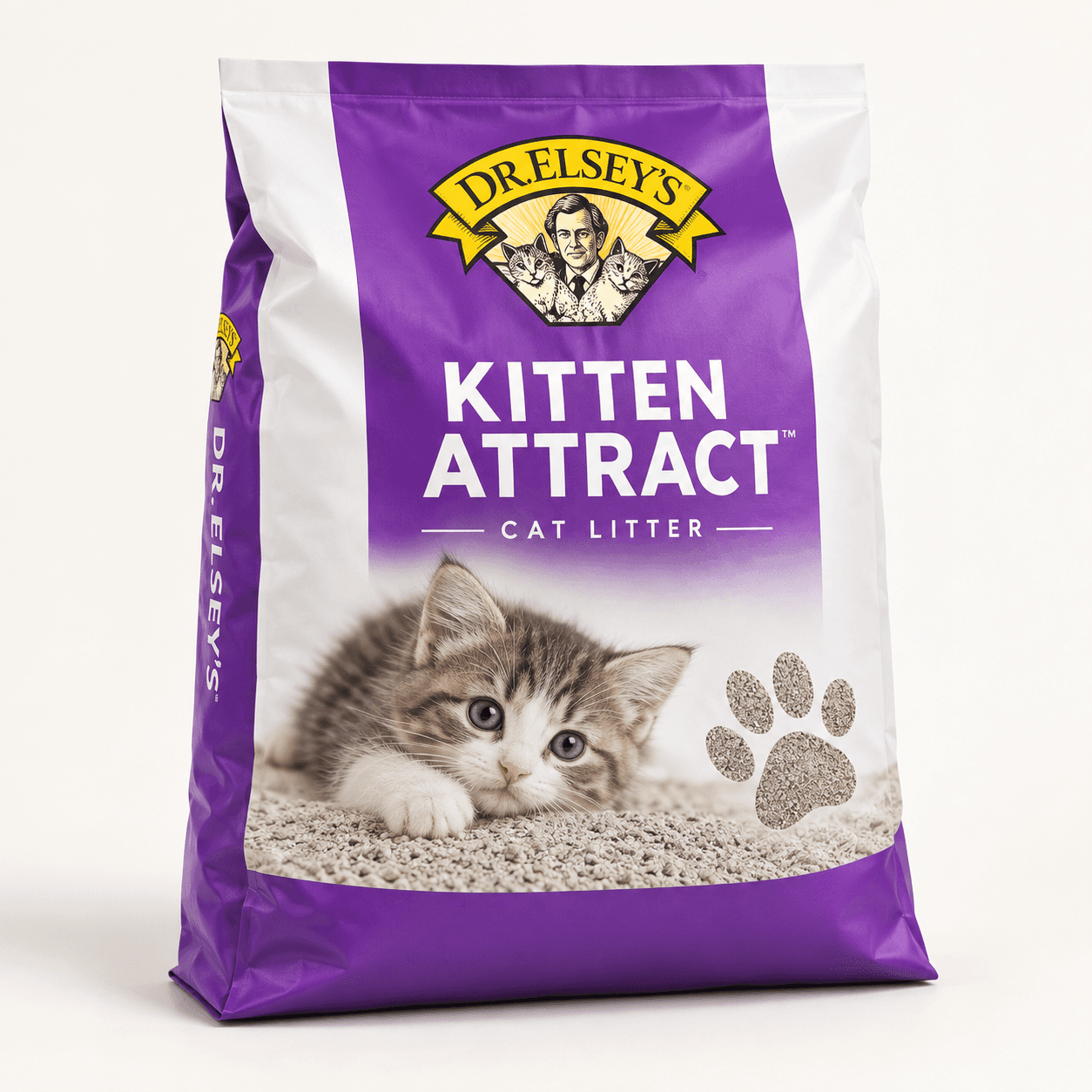
5. Dr. Elsey's Kitten Attract — Best training litter (8+ weeks)
 Best overall
Dr. Elsey's Kitten Attract
Fine-textured clumping litter with a natural herbal attractant
- Natural herbal attractant draws kittens to the box during training (manufacturer claim)
- Fine texture kittens dig in readily
- Vet-formulated; the brand vets recommend most for box issues
- Same low-dust discipline as the Ultra line
- It's a clumping litter — 8+ weeks and reliably not mouthing, per the safety rule above
- Pricier than the regular Dr. Elsey's line
- Harder to find in small stores
Why it's here: litter-box training is where habits form for life, and Kitten Attract is the only litter on this list built specifically for that window. The herbal attractant is one of the few litter additives with genuine behavioral purpose — it draws kittens to the box, which is half the training battle. The fine texture matches what kittens prefer to dig in. But the age gate is real: this clumps, so it belongs to kittens who've stopped mouthing everything, typically around 8 weeks. Used at the right age, it's the best training litter on the market.
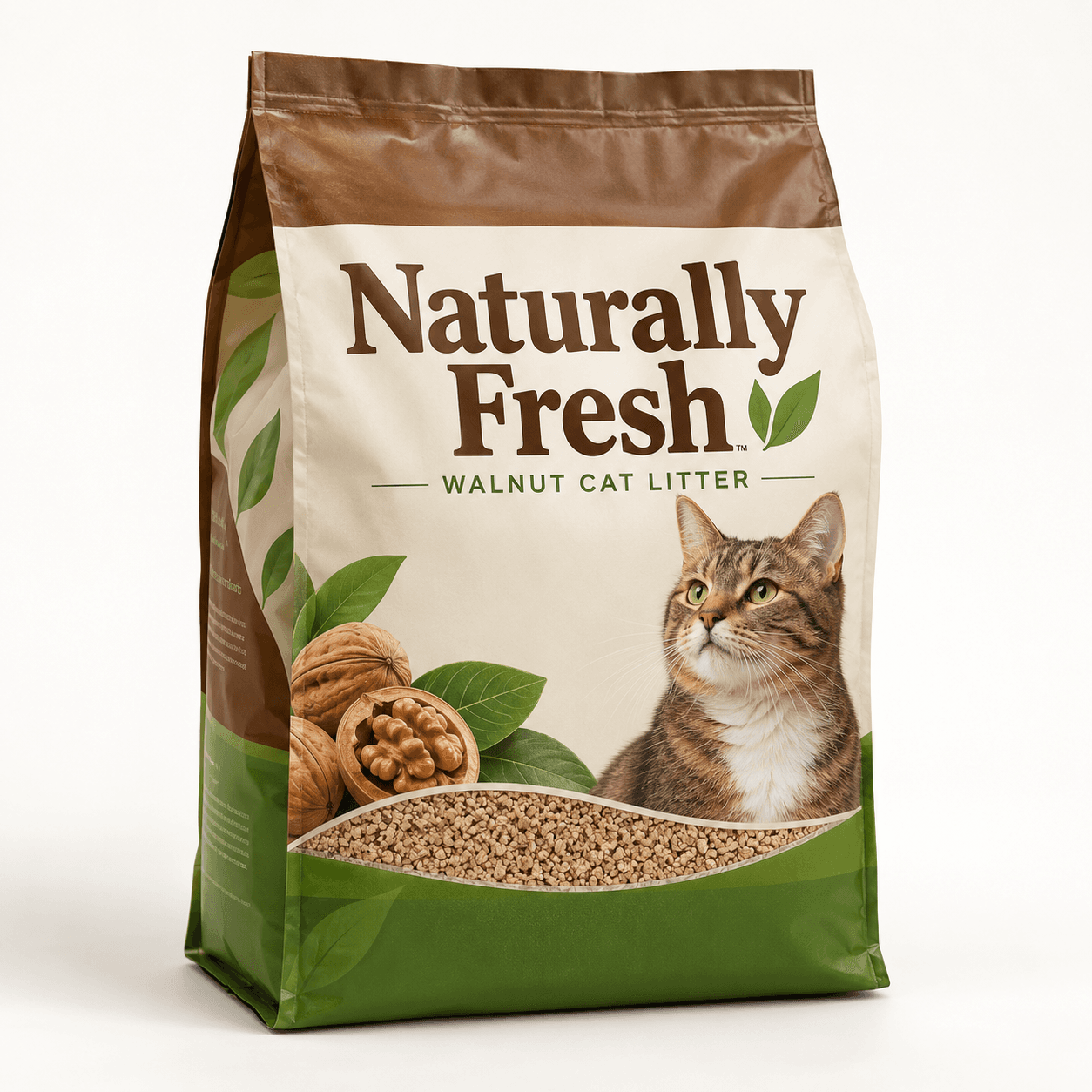
6. Naturally Fresh Quick Clumping Walnut — Best natural option (8+ weeks)
 Best natural
Naturally Fresh Quick Clumping Walnut Cat Litter
Walnut-shell clumping litter — a clay-free pick for older kittens
- Walnut shells — renewable, clay-free, biodegradable
- Clumps for easy scooping once the kitten is old enough
- Lighter than clay; easier to carry
- Good odor control for a plant-based litter
- Clumping — only for 8+ weeks and reliably not mouthing
- Softer clumps than premium clay; scoop gently
- Dark color makes urine monitoring harder
- Pricier than clay
Why it's here: for buyers who want to leave clay behind once the kitten graduates to clumping litter. Walnut-shell granules form genuinely scoopable clumps and control odor well without added fragrance, at a fraction of clay's weight. Same age gate as Kitten Attract applies — this is an older-kitten pick, not a newborn pick. And the honest caveat on walnut litters in general: the dark granules make it harder to notice urine color changes, so if you're monitoring a kitten's health closely, weigh that.
When to switch to clumping litter
The switch isn't really about the calendar — it's about behavior. Here's how to make the call:
- Confirm the kitten has stopped mouthing litter. Watch for several days: the kitten should dig, do its business, and bury — without tasting the substrate. If you're still catching litter-eating, wait.
- Go gradual. Mix the new clumping litter into the old non-clumping at roughly a quarter new to start, increasing over 7–10 days. Abrupt texture changes are a classic trigger for box avoidance in kittens.
- Keep everything else stable. Same box, same location, same low sides during the transition. Change one variable at a time.
- Have a fallback. If the kitten regresses and starts tasting the new litter, go back to non-clumping for another week or two. No harm done — that's exactly what the fallback is for.
One more training note that matters more than any bag: the n+1 rule applies to kittens too. One box per cat, plus one extra — so a single kitten gets two boxes. Place them near where the kitten sleeps and plays; distance is the enemy of training, and tiny legs need low sides. Our guide to how many litter boxes per cat covers the full logic.
A few training habits that beat any litter
Kittens learn the box fast when the setup makes success easy. Most training failures are location or access problems, not litter problems — a box that's too far away, too tall to climb into, or too dirty gets skipped, and then the habit forms somewhere you don't want. Get the setup right and the litter choice becomes secondary:
- Scoop solids daily. Kittens are fastidious; a dirty box is the fastest route to a corner of the carpet.
- Never punish accidents. Kittens don't connect punishment with the location — they connect it with you. Blot, enzyme-clean, and put another box closer.
- Keep the box quiet and accessible. No washing machines roaring overhead, no doors that close the kitten out.
- Top up after scooping. Kittens dig enthusiastically; keep 2–3 inches so they can bury properly.
Our verdict
For kittens under about 8 weeks — or any kitten still mouthing litter — buy non-clumping litter: Yesterday's News paper pellets for maximum safety, Dr. Elsey's Precious Cat Non-Clumping for the most natural texture, or Tidy Cats Non-Clumping on a budget. Once the kitten is reliably past the mouthing phase, Dr. Elsey's Kitten Attract is the best training litter for the job. Then graduate to whatever wins your adult-cat roundup — start with our best cat litter of 2026.
How we ranked these
Same honesty as the main roundup: we did not run these through a lab and we won't pretend we did. These picks are research-based — documented manufacturer specifications, recurring themes from large volumes of verified buyer reviews, and published veterinary guidance on kitten development and box training.
We ranked on three things, in order: (1) kitten safety at the target age — non-clumping and unscented were hard requirements for the youngest-kitten picks; (2) training help — texture and any genuine attractant technology during the training window; (3) practicality — dust, odor control, and whether you can actually rebuy the bag. Where a claim is a manufacturer promise (like an herbal attractant), we say so rather than presenting it as verified fact. If you want the full-field version of this logic for adult cats, start with our best cat litter of 2026.
Sources
- 2021 AAHA/AAFP Feline Life Stage Guidelines — peer-reviewed: one box per cat plus one, unscented litter preference, and kitten litter-box management.
- Montgomery County MD Animal Services — Solving Litterbox Problems (PDF) — municipal guidance: use shredded paper or chunkier litter with baby kittens; avoid clumping litter.
- Fear Free Happy Homes — Litter Box Basics (veterinary-reviewed) — box setup, unscented litter, and multi-cat rules.
Frequently asked questions
Part of our Best Cat Litter: 12 Picks Compared hub — start there for the full overview.
Keep reading
Affiliate disclosure: The Litter Logic earns a commission when you buy through links on this page — at no extra cost to you. It keeps our guides free and independent. As an Amazon Associate I earn from qualifying purchases. Read our full disclosure.